English version of an interview in Greek, published in Dialogos
AG: Why did you choose documentary film as your medium? What attracted you to this genre?
SS: Film is the best medium to show a living and breathing, sensory reality of a culture orally
transmitted, as it seizes cadences of speech and emotions, the inflections of stories, chants,
songs, diversity of languages and speech, and rituals in motion and performance. This is why
I chose the documentary style of ‘cinema verité’, where the camera becomes a medium for
cultural salvage and captures moments when people tell their stories without a script and in
their own spaces. Filmmaking becomes not simply a means of documenting cultural memory,
but also an act of listening and witnessing.
AG: What is Remembering Mariamman about and what are the issues it wants to highlight?
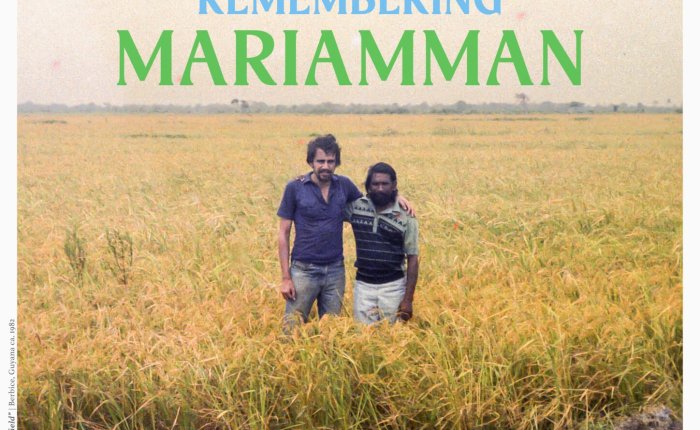
SS: The film explore displacement, migration, transoceanic and transcultural memory in diverse
temporal and spatial environments. I focus specifically on Hindu Shakti worship. Shakti is
the primordial divine female energy, which is expressed in multiple forms of female deities,
and male deities have their shakti forms with which they are paired. The form of Mariamman
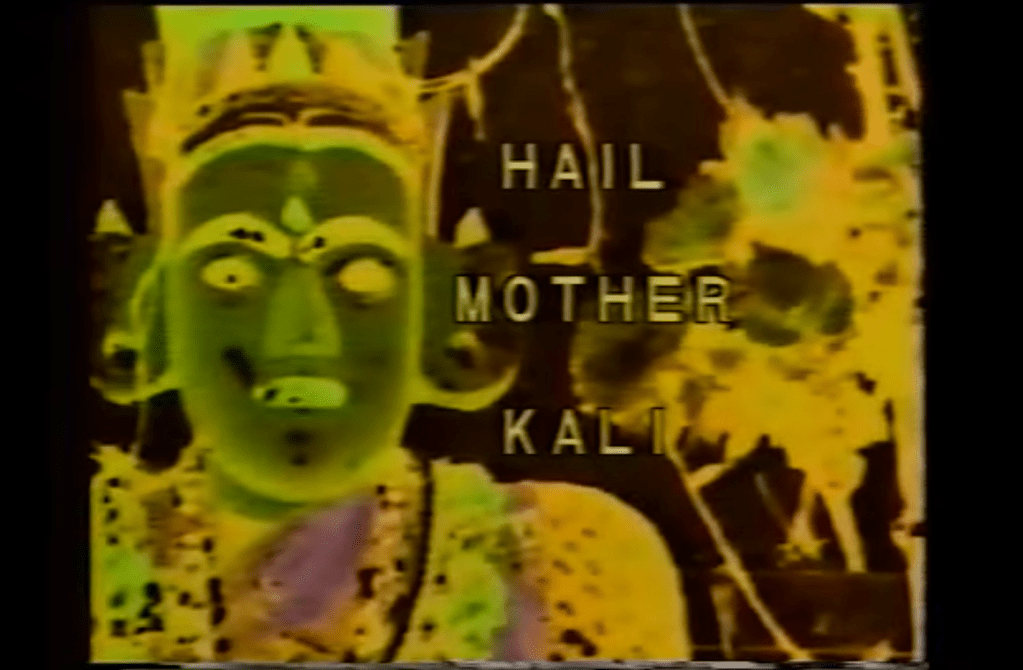
(often associated with the form of Kali) is a Tamil village goddess taken to sugar plantations in
British Guiana (now the Republic of Guyana) by indentured labourers (known as coolies) from
1838 to 1917. Coolies filled a labour gap that was created after the emancipation of slaves.
The film serves as a medium for cultural salvage of a marginalised community and their
dynamic growth through the historical burden and the heavy legacy of colonial exploitation,
fractured post-colonial histories and the force of economic collapse and migration to the
modern metropolises of global modernity. The film documents how sacred knowledge survived
primarily through oral traditions, songs, stories and embodied performance, and how the
temples serve as profound, psychological, spiritual and communal spaces. Rather than
presenting culture as something fixed or disappearing, Remembering Mariamman reveals its
resilience, adaptability, and dynamic growth across time and place. The film asks how younger
generations maintain these ancient rituals in a rapidly changing environment.
How did you experience the return to the same temple 35 years later, and what did you
discover again about the place, the people and about yourself?
Returning to the temple after thirty-five years was an intensely emotional experience. The
experience of return after long absences always plays tricks with our feelings. I felt a strange
sense of time/space compression. In the economic breakdown in the 1980s, about half the
country emigrated, and I had to manage the grief of losing many elders and peers when I faced
their absence. Nonetheless, it was exciting to see how a younger generation adapted the
tradition in a globalised and rapidly changing world. I always had a close relationship with the
children who had become leaders, and they remembered me fondly as an uncle who was deeply
involved in their lives and cultural practices. The return reminded me that I was not simply
revisiting a place I had filmed. I was returning to a community that had also become part of my
own emotional and cultural life.
What was the biggest challenge you had to face in the process of filming?
The main challenge was entering the sacred space and the intimacy of people’s lives. However,
I had built trust, kinship and belonging long before even thinking about the project of filming,
so when I took in the crew for the 1988 filming, people were excited but not distracted. At that
time, there were severe technical and physical limitations because of the conditions of the
Guyanese economy at the time. The temple did not have piped water nor electricity.
Communication was difficult because people generally did not have cars or phones, and
cameras were rarely seen. Equipment (e.g video cassettes) was scarce. We had to hire an
electric generator from the Guyana Film Centre, which we carried around us during night
filming. In 2023, the economy had shifted from sugar to oil and people owned cars, cameras
and mobile phones. The community was saturated with social media. My crew was only
Constantinos, who managed bravely, capturing multiple activities and endless conversations.
He was immediately welcomed and accepted, and perceived as ‘my family.
How do the different places referred to in the documentary (Guyana, India, Cyprus and
the USA) come into dialogue and why was it important to thread them into one
cinematographic narrative?
I am tracing the historical and contemporary trajectory of the people and how this journey
crosses with my own, not only physically, but imaginatively and politically. What were the
historical conditions that shaped the journey? The source of this form of worship is South India,
and it became interwoven with Caribbean Creole culture, and more recently took a new turn
with the recent waves of migration to urban North American environments. And, of course, I
bring in my own experience of displacement, migration, and memory. I was born in Trikomo,
Famagusta, and I have lived and travelled in many places. In addition to colonial history and
post-colonial history, I was touched emotionally and imaginatively by a sense of deep memory,
which motivated me to explore trade routes in antiquity which connected the Greco-Roman
world and the Coromandel coast, which was called Pandyan Mediterranean by the Romans.
These connections allowed me to imagine and depict the four locations as part of a much longer
history of movement, exchange, and cultural encounter.
What is a “good” documentary for you? Does it have to be objective or does it take a
position? How objective can a documentary be or has to be?
Objectivity is not a word I would use. There is an authorial point of view, which emerges in the
process of exploration and evocation of perspectives in a polyphony of voices. I also bring in
my own poetic and literary voice to open up ways of seeing, hearing, and experiencing the
world and felt life. I chose a ‘cinema verité’ approach where the camera is a living participant.
The choice of cinematographer was therefore very significant, and in this case, he was also the
2023 cameraman in the field. I wanted him to immediately empathise with the texture of the
experience as it was happening in real time, unrehearsed, knowing what to frame, how long to
hold a shot, and whose voice to elevate. While evading the idea of objectivity, I aim for
transparency of perspective and self-reflection in the process of representation, and of course
ethical responsibility toward the people whose lives it represents.